
Quantum Fields, Intuition and Black Holes
Federico Faggin's theory of consciousness and Artificial Intelligence

"I remember the compulsion I felt floating by the surface, my face pressed into the glass of the mask. The golden light pulling me, a part of me, ecstatically. I couldn’t leave. I knew the desire, and I wanted to return there." — In Ascension
Black Holes
You aren’t meant to see a black hole. It traps light, pulling everything inward, revealing nothing. In 1964, a pair of X-ray detectors discovered a strange, intense source in Cygnus ( a star constellation) . Later, scientists realised it was a black hole.
A black hole begins as a star collapsing inward, its gravity folding spacetime like a clenched fist. At its centre lies the ‘singularity’, a point where matter, energy, even the laws of physics, break down. The edge is the ‘event horizon’: the final boundary. Cross it, and not even light returns.
Capturing something designed to be invisible is no easy task. Yet in April 2019, the world glimpsed the impossible: a photograph of a black hole, 6.5 billion times the mass of the Sun, was captured by the Event Horizon Telescope.
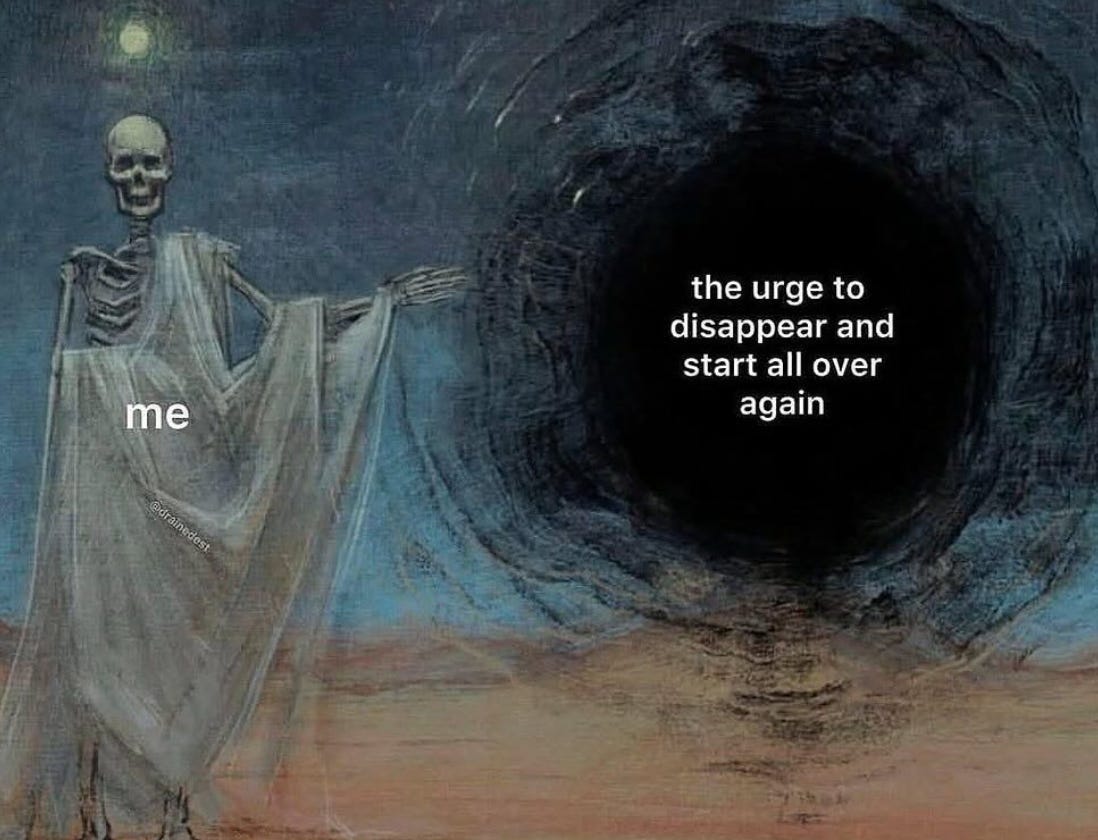
Now… to me a black hole represents more than just a hole in space, it is a hole in our understanding. Surrounding it lies something beyond measurement, a dark and mysterious region. A boundary. Its power is real, even if we cannot see it.
Watching a scientist explain the photograph, his eyes frenzied with excitement, this both scares and thrills me. ‘We did the impossible!’ exclaims. Space is a portal to the impossible, where the rules of our world begin to vanish, where the place I call home and the walls that stand around me begin to crumble. And I feel small, very small.
"There could only be a meeting of their mysteries if one surrendered to the other: the surrender of two unknowable worlds done with the trust with which two understandings might surrender to each other." - Clarice Lispector
The Death of Intuition
Martin MacInnes’ In Ascension explores the pursuit of knowledge. The narrator, marine scientist Leigh, discovers an ultra-deep ocean vent, mysterious and untouchable, kind of like a black hole of the sea. No one has survived its depths to tell the tale.
Leigh joins the Endeavour expedition to explore it. Clues emerge of the vent’s power as crew members fall ill, hinting at forces beyond understanding.
What happens when our logic is naive? Can logic be naive?
Science often (NOT always) assumes determinism which is the belief that knowing all conditions now allows perfect prediction of the future. Yet black holes defy this. Predictable laws clawed at by uncertainty. Mystery as a means to an end.
We seek certainty in algorithms that promise clarity like stock predictions, recommendations, career paths. Yet the most meaningful human experiences like love, art, intuition exist in unpredictability. They cannot be coded. We around stab in the dark to find the words to explain them, we finish a whole life cycle and still barely understand. We grasp at it, fumble and play. No life is linear.
Surrendering decision-making to purely algorithms risks eroding intuition, this inner compass we all have. Intuition thrives in uncertainty; it guides us when maps fail.
The Ocean of Consciousness
Federico Faggin is a physicist. Faggin offers a lens on intuition and consciousness. He says, “Consciousness is not something that emerges from the brain; it is a fundamental aspect of reality itself.”
So let me explain; Imagine quantum fields as a vast, invisible ocean flowing through the universe. Every particle, every wave, every spark of matter is a ripple on its surface. Our bodies and our brains are like tiny vessels floating on this ocean, guided by currents of awareness we cannot always see.
Faggin says that our brains are quantum-classical machines: physical systems that interact with these conscious quantum fields, processing information and making choices shaped by a deeper, living reality.
Our brains aren't merely classical computers processing information mechanistically. Instead, they're sophisticated interfaces that can interact with quantum fields that Faggin associates with consciousness itself. So consciousness isn't just produced by our brains but is a feature of reality that we tap into. Like wetness is to water.
“You can measure something in isolation, but you cannot understand it without its context in the whole.” - Federico Faggin
True understanding, he suggests, emerges not from detached data, but from feeling and relational awareness and seeing how each element interacts within the living web of reality. This is what gives rise to intuition: a subtle, embodied knowledge of our place in the world and its possibilities.
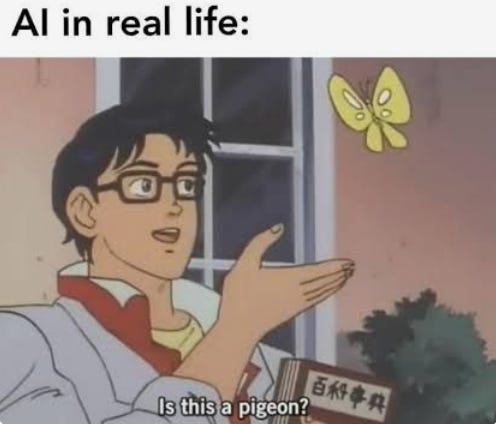
AI, however sophisticated, can only process isolated data points. It cannot inhabit the whole, cannot feeeel the ocean, and therefore cannot experience or guide us with intuition.
This is obviously an incredibly radical idea, but to me this is one that makes sense of my experience with reality. As far as I am aware, in mainstream science consciousness is produced by brain activity, so no brain, no consciousness.
The Risks
Leigh (in the novel In Ascension) embodies humanity’s relentless pursuit of knowledge at all costs. She sacrifices relationships, safety, and even selfhood for discovery. Her journey mirrors society’s embrace of technology and AI, advancing knowledge without weighing human cost.
Black holes are terrifying not just for their emptiness but for what they represent: the limits of understanding. Jumping into one would lead to spaghettification (a stretching and compressing by unimaginable gravity). Impossible to visit, yet humanity still ventures into space to driving innovation.Yet every advancement carries risks. Astronauts face radiation, bone loss, fluid shifts, cardiovascular strain ( to name a few).
AI offers answers without understanding, missing nuance, and risking mistakes if unobserved by humans.
Black holes, deep-sea vents, and strange objects in space all remain untouchable and mysterious. They remind us that some knowledge is beyond reach, and that the unseen can shape reality profoundly.
In this age of AI and technological acceleration, intuition remains humanity’s inheritance. Like black holes shaping space invisibly, intuition guides us through uncertainty. AI may offer certainty, but only intuition knows the world without explanation.
Started reading on my way to work and finished it on my way back home. I’d never really stopped to think about how our intuition is shaped by everything we’ve been through and how impossible it is to replicate.
Thanks for this! I love how you make me notice all the little things that make us so special :)
This was fascinating to read. Your essay made me think and ponder and I love that for once, I was not reading a guide to become smarter or a wishlist for fall. Thank you for sharing that!